
CCTV for Holiday Parks
& Farms
Large, open sites are hard to cover with a handful of cameras from a shop. This guide explains how to plan CCTV for a holiday park, campsite or farm, which cameras suit which job, and what the law expects.
Updated November 2026 · All guides
Start With
What Needs Covering
The best systems start with a walk round the site, not a camera catalogue. Before choosing any equipment, work out:
- The ways in: entrances, gates and car parks, where every vehicle and visitor passes.
- What is valuable: reception, shops, workshops, fuel, machinery and livestock sheds.
- The big open areas: pitches, yards, fields and beaches, where one camera has to see a long way.
- Power and network: how each camera gets power and connects back, including outbuildings and remote spots.
A Survey Should Give You
- A camera placement plan with coverage zones
- Equipment and storage sized for your site
- Cable routes to outbuildings planned
- A clear quote up front
Which Camera
for Which Job
Turret and dome cameras are neat and suit entrances, rooms and buildings. Many now record in colour after dark.
Bullet cameras have a longer lens for driveways, fence lines and field edges, and their shape makes it obvious the area is covered.
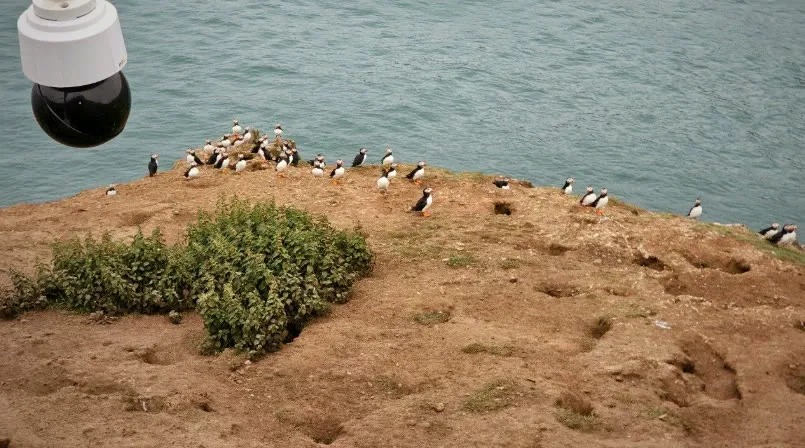
PTZ cameras pan, tilt and zoom, so one camera can watch a whole park, beach or yard and zoom in live from your phone. Use them alongside fixed cameras, so nothing is left uncovered while the PTZ looks elsewhere.
Number plate (ANPR) cameras keep a searchable record of every vehicle at the gate, and can work with a barrier so known vehicles are let straight in.
Thermal cameras see heat, so they pick out people and vehicles in total darkness or fog on large, remote sites.
Holiday Parks Need
- Wide coverage of entrances and car parks
- Number plate recognition at the gate
- Cameras on amenity buildings
- Viewing from your phone
On the
Farm
Farms have their own challenges: long distances, buildings spread across the land and spots with no mains power.
- Long range outdoor cameras for yards, outbuildings, access gates and machinery.
- Lambing and calving monitoring, so you can check the shed from the house or your phone.
- Solar powered cameras for remote spots without mains power.
- A connection that reaches, using cabling or a wireless link to farm buildings, and the right internet connection so you can watch from anywhere.
Also on the Farm
- Sensors for water, fuel and temperature
- Rural broadband for the farmhouse and yard
- One team for cameras and connection
Recording
& the Law
How long to keep footage: it depends on the number of cameras, the picture quality and the storage. Standard installations typically keep 30 days of motion triggered footage. Cheap systems often use drives that are too small and overwrite footage within a week, so make sure storage is sized properly.
The law: if your cameras film staff, guests or the public, UK data protection law applies, and the Information Commissioner’s Office can act when it is not followed. You need clear signs, cameras aimed only at what you need to protect (not neighbouring homes), footage deleted after a set period, and footage kept secure and easy to find if someone asks for theirs.
What We Do
- Plan positions to cover what you need, and nothing more
- Supply and fit clear CCTV signs
- Set recordings to delete automatically
- Show you how to find and export footage
Planning CCTV for a park, campsite or farm? Call 01437 76 33 33 (Wales) or 01579 68 60 01 (South West).
More Guides
The 2027 Phone Line Switch Off
What is being switched off, what it affects in your business and what to do before 31 January 2027.
Read the guideStarlink or 4G and 5G?
How to choose between satellite and mobile broadband when fibre has not reached you.
Read the guideChoosing a Holiday Park WiFi Provider
Ten questions to ask before you sign, and the answers you should expect.
Read the guidePrivate 5G Explained
What a private 5G network is, what it needs and who it is for.
Read the guideCyber Essentials Explained
What it checks, how Plus differs, who needs it and how the First Step Fund takes 75% off.
Read the guideManaged IT Support Explained
What it covers, managed or pay as you go, and the questions to ask a provider.
Read the guide
Planning CCTV for
Your Site?
Tell us about your site and what needs covering. We’ll call you back and arrange a free site survey.
Alternatively, you can contact us on:
You’ll be answered by a human in our office!
CCTV for Parks & Farms
Frequently Asked Questions
What is the best CCTV camera for a holiday park?
Usually a mix: fixed turret or dome cameras on entrances and buildings, number plate recognition at the gate, and a PTZ camera to watch the wider park and zoom in live. A site survey decides the mix.
Can CCTV work on a farm with no mains power in the field?
Yes. Solar powered cameras can cover remote spots without mains power, and wireless links or cabling can connect outbuildings back to the recorder.
How long should CCTV footage be kept?
Only as long as you need it. Standard installations typically keep 30 days of motion triggered footage, then delete it automatically. The storage should be sized at the survey so footage is not overwritten early.
Do I need CCTV signs on my holiday park?
Yes. If your cameras film staff, guests or the public, people must know CCTV is in use and who runs it. We supply and fit clear CCTV signs as part of the installation.
Can I watch my CCTV from my phone?
Yes. Remote viewing is set up on your phones and computers at handover, and PTZ cameras can be moved and zoomed from your phone.
Can number plate cameras open a barrier?
Yes. ANPR cameras can work with a barrier so that known vehicles are let straight in, and every vehicle is logged with the time and a picture.